
Photo courtesy of Kirsten Francis
When it comes to creating a holiday home that feels collected, personal, and full of character, few know the art of the mix quite like Eddie Ross. A creative director, stylist, and product designer, Eddie has built a career across food, fashion, interiors, and the decorative arts, bringing an editorial eye and a lifelong love of collecting to everything he creates.
A graduate of the Culinary Institute of America, Eddie began his career as a food producer at Martha Stewart Living Television and Food Network before moving into the world of interiors and editorial. He went on to serve as a Decorating Editor at Martha Stewart Living and House Beautiful, as well as East Coast Editor of Better Homes & Gardens. Today, his creative direction and styling can be seen across fashion and home, working with brands including Lilly Pulitzer, J. McLaughlin, and Bloomingdale’s.
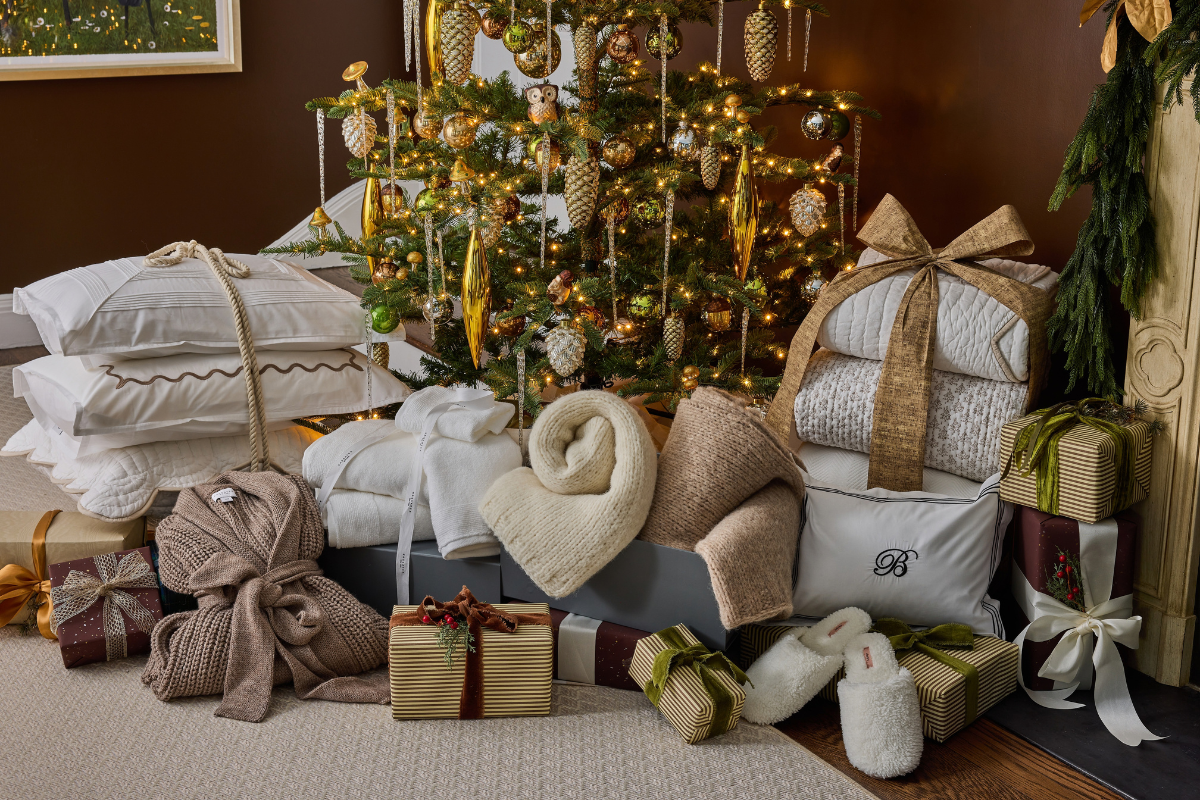
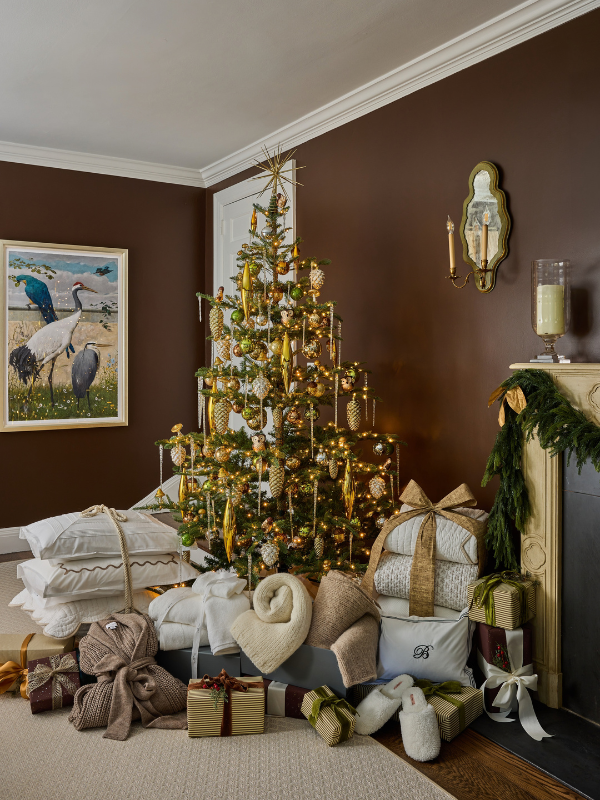
For our latest holiday campaign, we invited Eddie to bring his signature layered approach to Kassatex— mixing old and new, polished and collected, and plenty of festive details along the way. The result feels true to his philosophy: holiday decorating is at its best when it tells a story rather than following a formula.
With the season ahead, we sat down with Eddie to talk all things holiday styling— from the tricks he uses behind the camera to the vintage treasures he brings out year after year, the decorating rules worth breaking, and why the best holiday homes are never too perfectly matched.

Photo courtesy of Eddie Ross

Photo courtesy of Kirsten Francis
Q&A with Eddie Ross
Kassatex: When you walk onto a set for a photo shoot, what’s the first thing you look at before you begin styling?
Eddie Ross: The first thing I consider is what I need to make happen to bring the client’s vision to life. What are we trying to say? What’s the story? What does this photograph need to accomplish? I’m always thinking about the brand and the client first.
Then I start looking at the space and figuring out how to make that vision work for the camera. What’s moving, what’s being added, what needs to go, where does the eye land? I love that problem-solving part of styling.
How is styling a room for the camera different from styling a room for real life?
I learned that early on in my editorial career. In real life, you’re experiencing a room in three dimensions. You’re walking through it, noticing details, seeing angles. A photograph flattens everything.
So for the camera, sometimes you have to exaggerate scale, move furniture closer together, take something away, or add something that might feel slightly strange if you were standing in the room. And there are definitely things that are gorgeous in person but disappear in a photograph. That’s why I’m constantly looking through the camera and making tiny adjustments.
Photos courtesy of Kirsten Francis
Kassatex: Your work always feels layered and collected rather than overly styled. What’s your approach to mixing color, pattern, texture, and objects without letting a shot feel too busy?
ER: I love things and I love rooms that tell you something about the person who lives there. I never want a room to look like everything was bought on a single day.
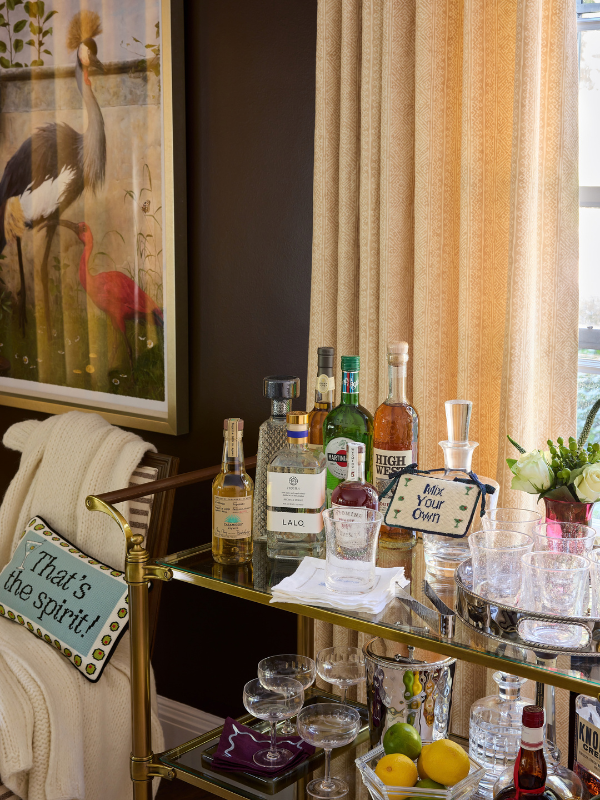
For me, it’s about blending new and old and pieces from different time periods. I might put a gorgeous modern lamp next to a Venetian glass bowl or mix polished silver with wicker, chintz, tortoiseshell, bamboo, something unexpected.
I edit constantly because I want the mix to feel intentional, not busy. There’s a point where one more thing makes it better, and then a point where one more thing just makes the picture feel too busy, and you don’t know where to look.
Kassatex: How much of what we ultimately see in a beautiful photograph is planned ahead of time and how much happens spontaneously once you’re on set?
ER: Both. There’s a lot of planning that happens before I ever get to set, thinking through the story, the palette, the props, the tabletop, the flowers, the linens, how everything flows from one shot to the next.
But then you get on set and something happens by accident. Maybe a bowl meant for the table ends up on the mantel, or you step outside and grab a gorgeous architectural branch from the garden and suddenly it makes the whole picture. You have to come prepared, but you also have to be willing to throw the plan out the window when something better happens.
Kassatex: What’s the styling trick you find yourself using again and again? The small adjustment that can completely change a photograph.
ER: Edit down the photograph. Everyone assumes styling is about adding, but more often, it’s about refining. I’m constantly looking through the camera and asking what can we simplify. Sometimes removing something makes everything else sing.
Photos courtesy of Maggie Riordan
Kassatex: What’s the first thing you do in your own home that officially makes it feel like the holidays?
ER: I start with my holiday collections, the ornaments and all of the treasures I’ve gathered. Each piece has a story and a memory, and going through them is what makes it feel like the season has begun.
Kassatex: Vintage Christmas or polished and new?
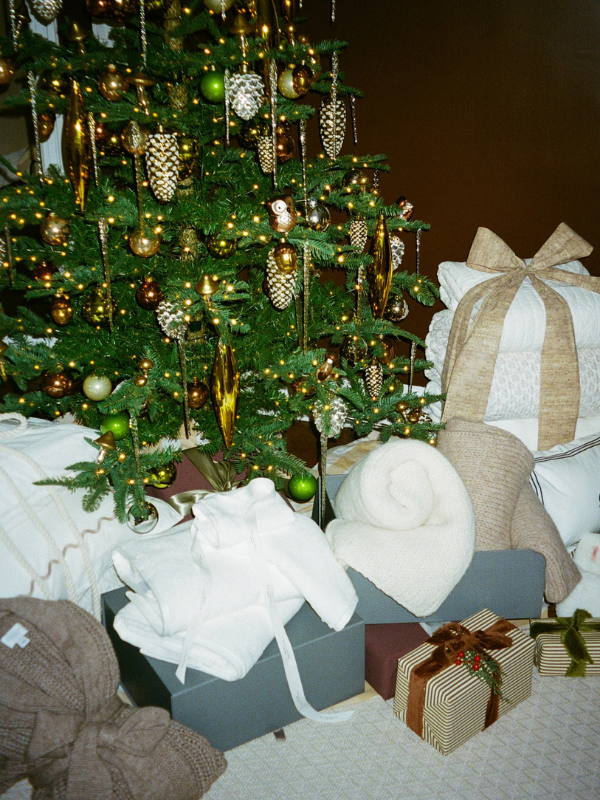
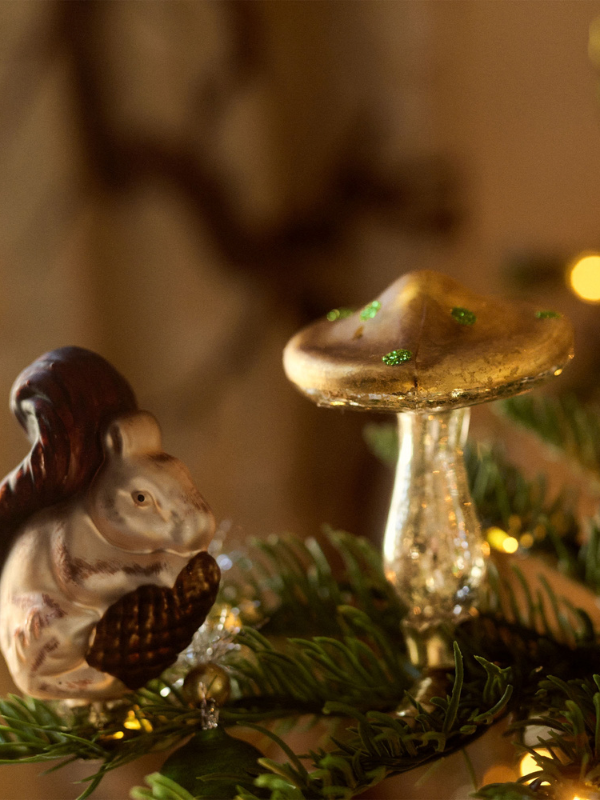
ER: Vintage Christmas, 100%. The magic happens when the old and new sit together. I love old glass ornaments, tinsel, candle clips, vintage ribbon, silver. It feels imperfect in the best way, with sparkle and story. It’s not about everything looking showroom perfect.
Kassatex: What’s your number one rule of thumb, or rule made to be broken, when it comes to holiday decorating?
ER: The rule I’d break is everything must match. That’s the fastest way to kill the spirit of the season. Don’t buy Christmas in a box. Mix what’s good with what’s sentimental. Family heirlooms with newer pieces from my own ornament line and even flea market finds. Mix new tortoiseshell ornaments with vintage mercury glass, something unexpected. It’s not about being matchy, it’s about being personal.
Kassatex: Whose butler’s pantry would you most want to raid for holiday decor?
ER: I worked with Martha, and I’ve been through the butler’s pantry in Bedford and up at Skylands. She has one of the most beautiful collections. She’s been collecting gorgeous things her entire life.
I’d want to pull from both of those spaces. The china, the silver, the glassware, the linens, all of it. I’d disappear in there for days, mixing services and pulling pieces from different patterns and periods.
Kassatex: Holiday decor is never complete without ________.
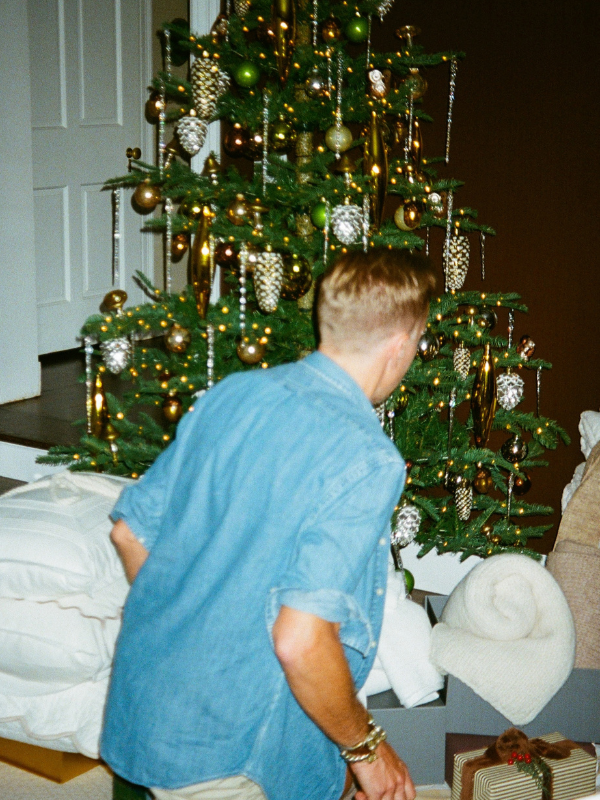
ER: Beautiful, delicate glass icicles, hanging from garlands and greenery. They catch the light and give everything that old-world sparkle. I love them so much I included them in my own Christmas ornament collection.

Photo courtesy of Eddie Ross

Photo courtesy of Maggie Riordan
Kassatex: Best flea market or thrift find that you incorporated into your holiday decor?
ER: A ginormous silver-plated bowling trophy on a pedestal. I turned it around, took the plaque off, and suddenly it’s just this gorgeous silver gazing ball. It looks so chic with a wreath around it.
Kassatex: Colored lights or classic white lights?
ER: Classic white lights. I love the soft, timeless glow of white lights, especially with vintage ornaments, greenery, and silver. The white lights enhance the colorful ornaments without overpowering them.
Kassatex: Passed-down holiday china or a freshly mixed and matched table?
ER: Passed-down holiday china mixed with newer pieces. I think the only way to make vintage holiday china feel fresh is to mix it with something new. The things that are new now will be vintage in 20 years, so bring them together. Use the traditional and inherited with something new and unexpected. It gives the table history without making it feel stuck in the past.
Kassatex: A traditional Christmas tree or a tree with an unexpected design twist?
ER: A traditional Charlie Brown style Christmas tree, one that isn’t overly full. I like a tree with breathing room. The space between the branches lets the ornaments dance together. That breathing room is magic.
Kassatex: When it comes to holiday traditions, are you all about preserving them exactly as they were? Or finding ways to reinvent them every season?
ER: Both. Traditions are what give the holidays meaning, but life changes and traditions are allowed to change too. I hold on to old memories but make space for new traditions as well. That mix of nostalgia and reinvention is what keeps the holidays feeling alive.

Photos courtesy of Eddie Ross